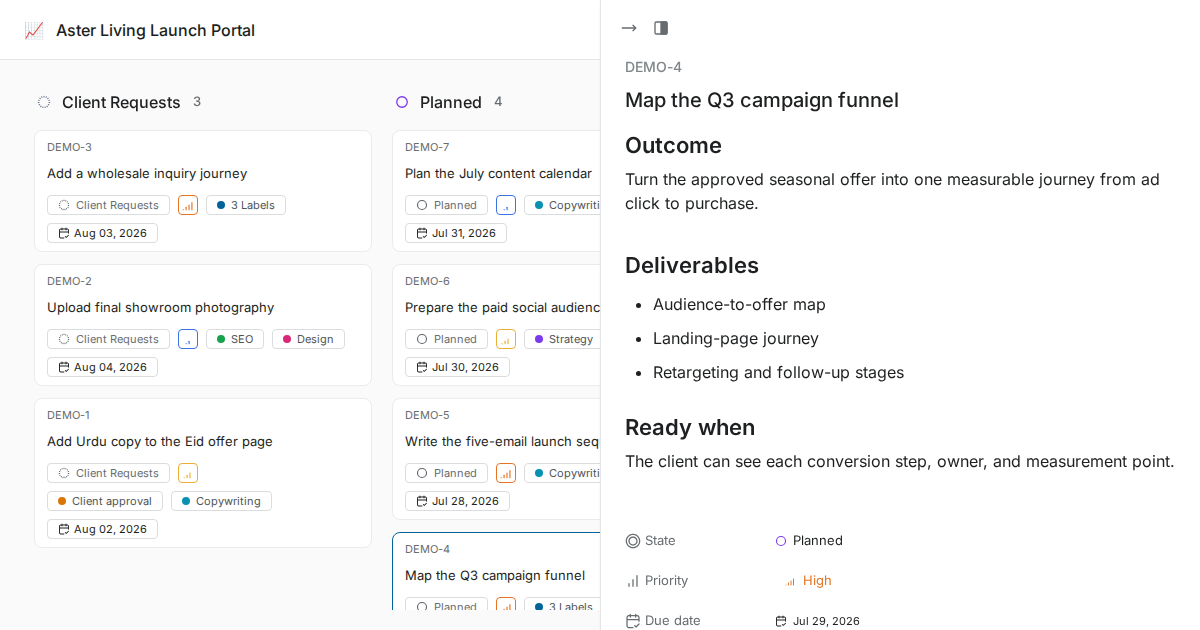
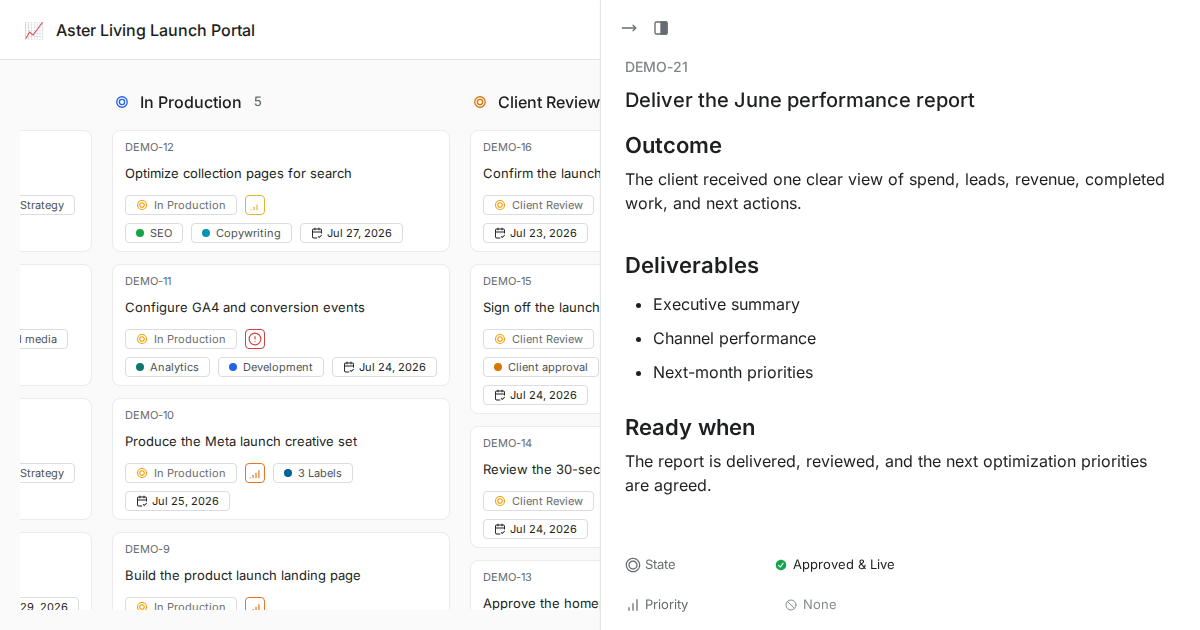
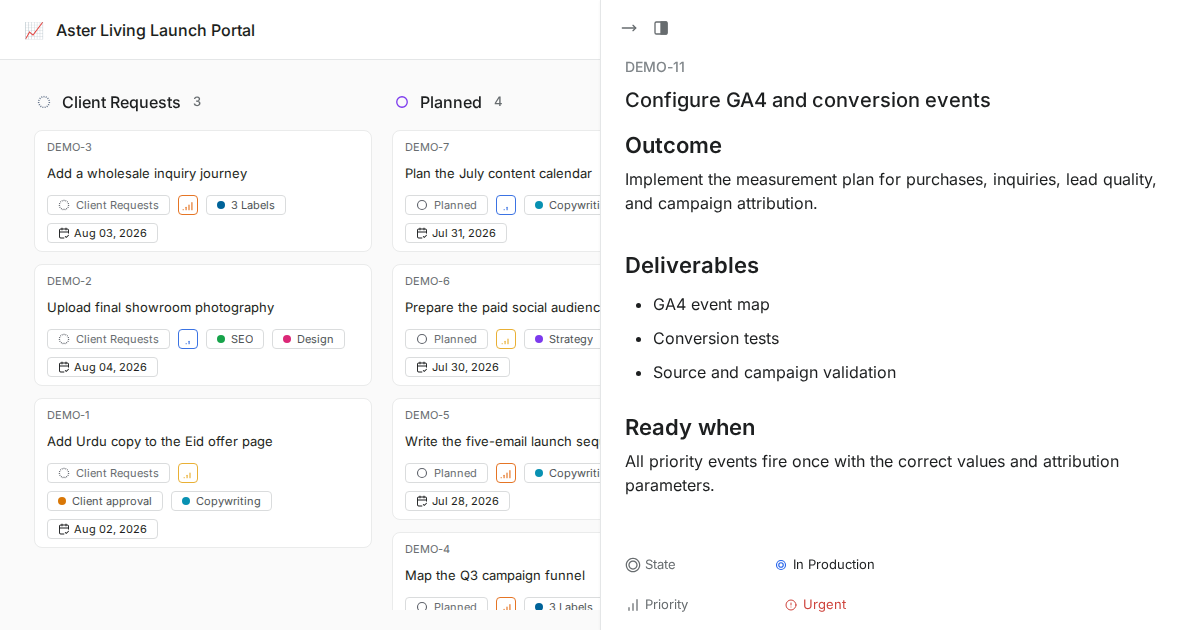
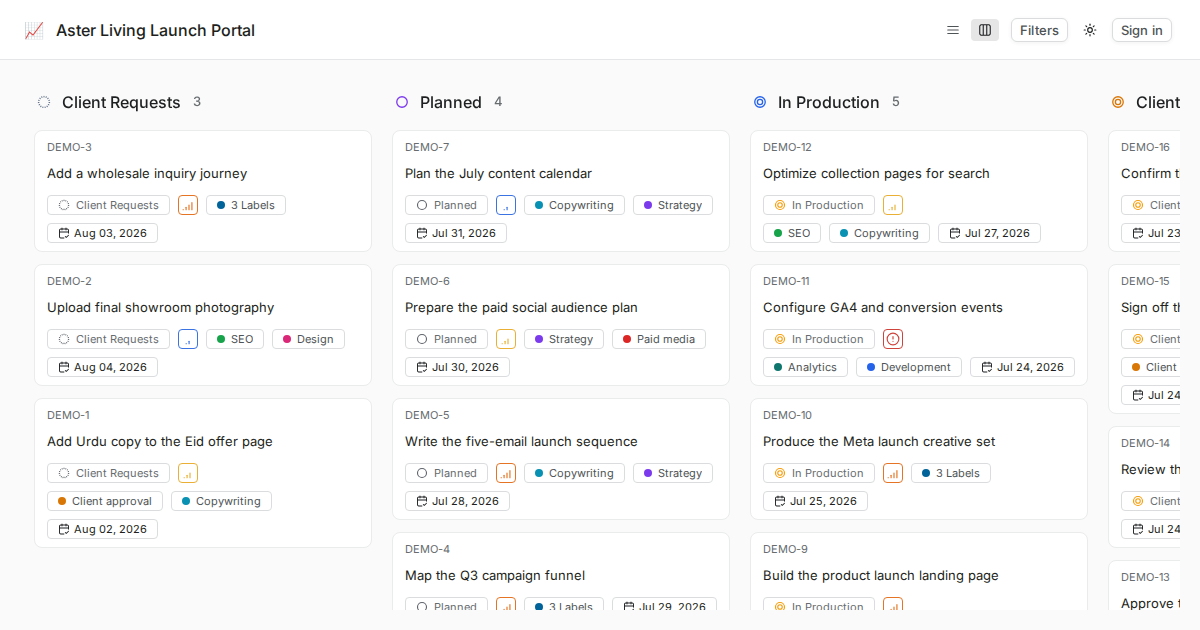
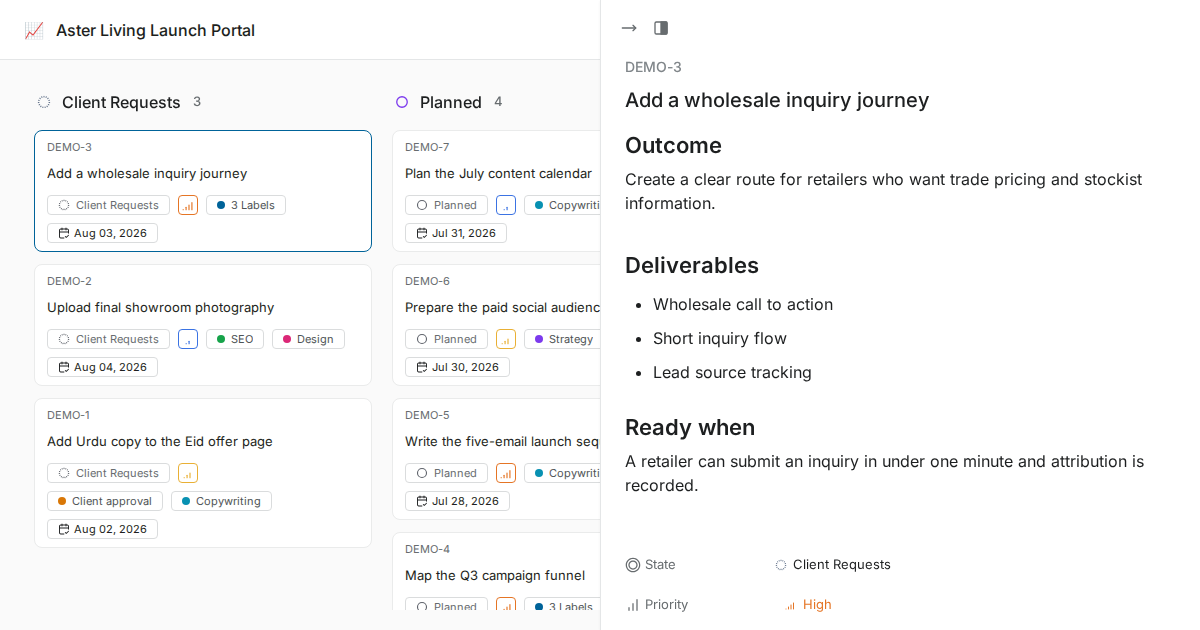
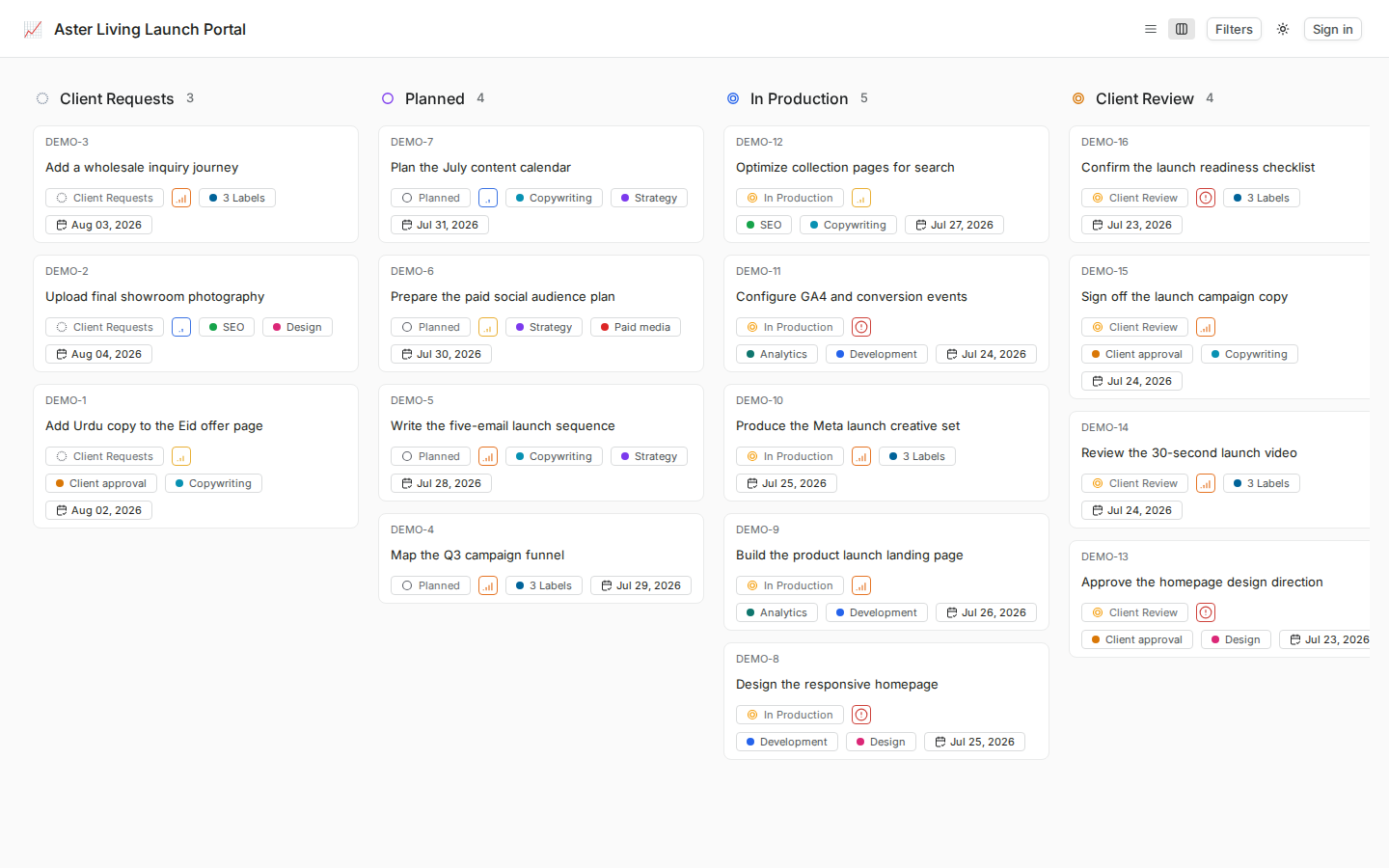
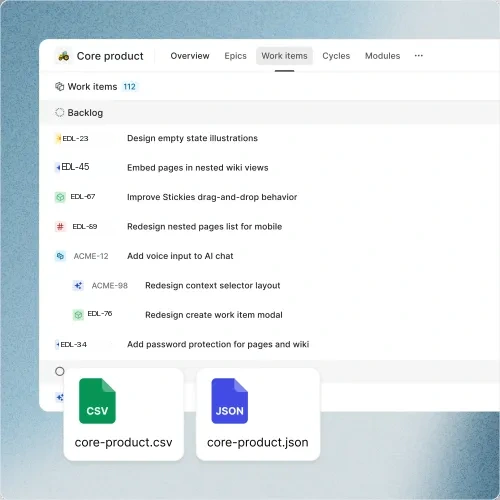
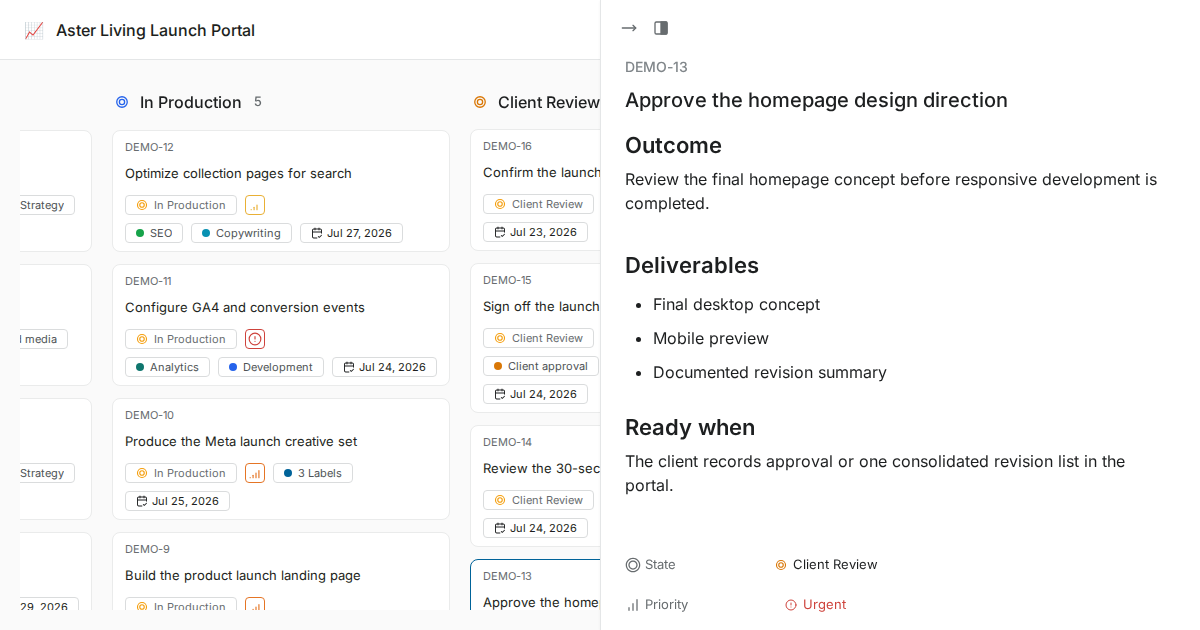
Work items are the system of record for client delivery. Rich descriptions, states, owners, labels, priorities, due dates, image previews, and activity keep every request tied to the work that moves it forward.


Built for agencies
and client teams
Not just a ticket.
A complete surface for work.
Context, connections, and history in one place. Built for the team that
needs to understand, not just the person who filed it.


A document where the work lives
Keep a rich description, comments, files, links, and project context beside the work item so the brief and delivery record stay together.


Activity that keeps context visible
Use the activity and comments available in the deployed version to understand how a work item changed and who responded.


Context that prevents surprises
Use labels, links, comments, owners, and available relationships to keep related client requests connected.
Ownership and context around every
work item
Create structured work items from client requests
Capture the request, owner, due date, labels, files, and next step in one place instead of rebuilding the task from scattered messages.


Assign work to the right owner and stage
Use states, labels, members, comments, and activity history so every handoff is visible to the team and client.


Keep descriptions, files, and previews together
Imported Trello descriptions, comments, labels, and image attachments stay connected to the card so context is not lost.


Keep related work from splitting apart
Related items, labels, and history keep repeated client asks connected to the right work.


Status context in one place
Comments, activity, linked items, files, and history stay together for fast status review.


Structure that scales
without adding overhead
Configure clear states, labels, owners, priorities, dates, and saved views around the client delivery process.


Standard work-item setup
Use standard work items with states, labels, owners, priorities, due dates, comments, descriptions, and files.


Kanban and available project views
Use the Kanban board as the primary client view and configure the saved views supported by the deployed Community version.


Bulk operations
Use available bulk actions after they are verified on the deployed Community version.


Activity history
Keep comments and available activity together with the work item; formal audit controls are not claimed.


Reusable delivery conventions
Document standard descriptions, labels, states, checklists, and Project Pages for repeatable client setup.


Repeatable client work
Reuse documented project setup and checklists; automatic recurring work is not included in the standard deployment.
Where client delivery stays connected
Projects, comments, files, ownership, states, and client updates stay connected through work items.


Your work items. Your infrastructure.
Deployment scope depends on the Community version, hosting model, infrastructure, and separately agreed services.
Installation planned for your infrastructure
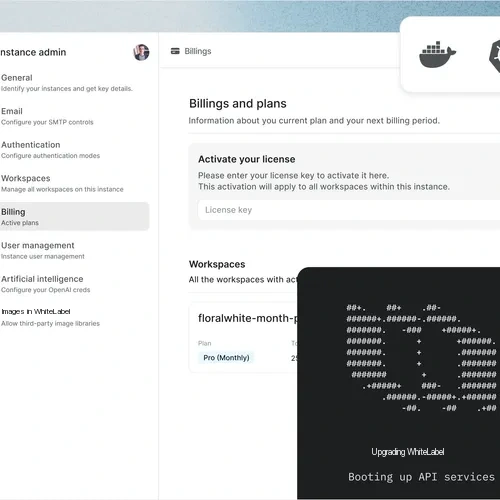
Docker-based deployment
Backup requirements scoped separately
Private deployment available
Plan a scoped Trello migration
Admin panel for SMTP, auth, and more
Instance administration for instance config
Security, permissions, and hosting control
WhiteLabel gives agencies the controls clients expect: available roles, visible activity, hosted deployment, and self-hosted options.


Built around practical access controls
Available workspace and project roles, private hosting options, and visible work-item activity for each client workspace.


Hosting options for reliable delivery
Choose managed hosting or self-hosted deployment. Keep portal ownership, domains, and operational controls aligned with each client.


Access controls for every workspace
Role-based access and 60-day sessions across every workspace. Keep client access controlled.
Branded client
delivery starts here